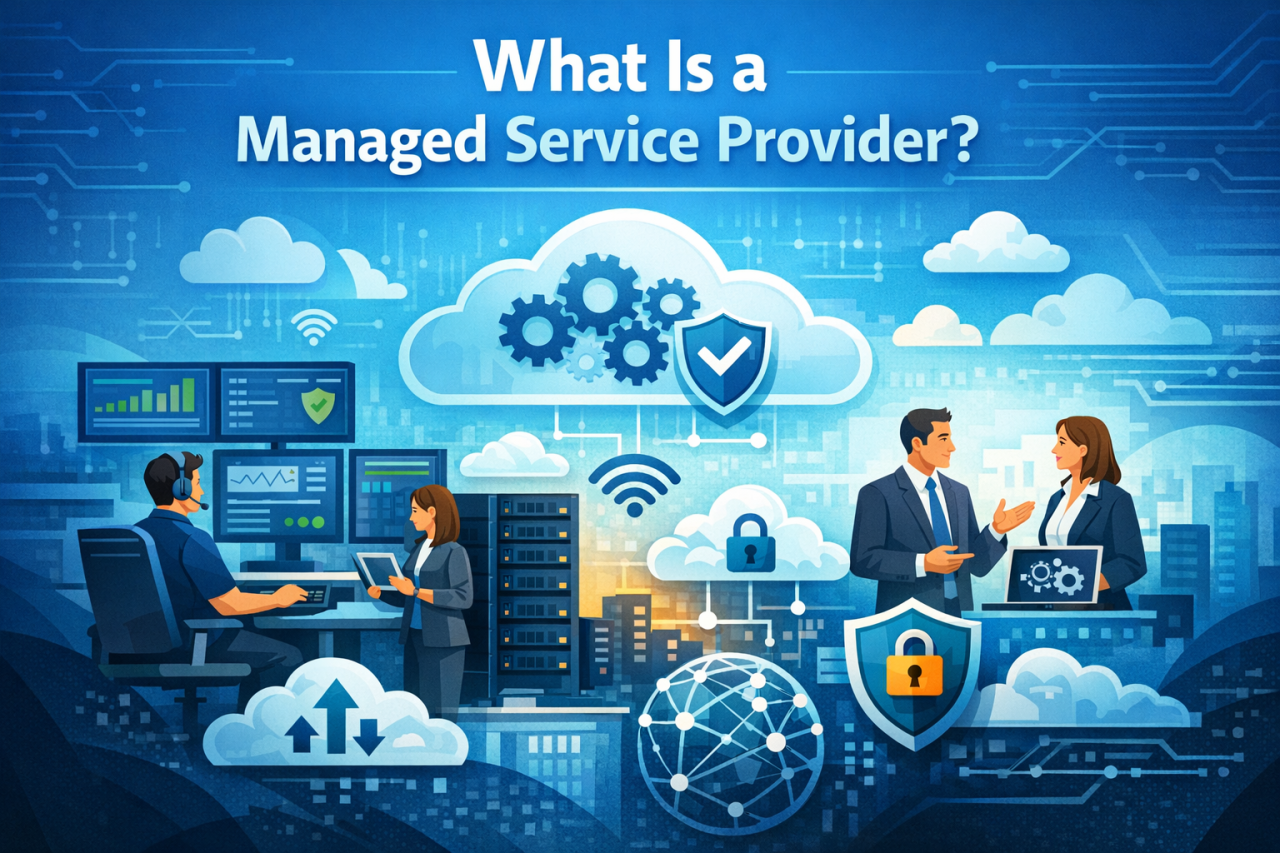
If your team is stuck reacting to IT issues instead of preventing them, it may be time to rethink how your technology is managed. A managed service provider, often shortened to MSP, is a third-party company that remotely manages, monitors, supports, and improves a business’s IT systems for a fixed monthly charge or other predictable pricing model.
For many organisations, an MSP brings structure, specialist knowledge, and proactive support that an overstretched in-house team cannot always provide alone. In this guide, we’ll explain what an MSP is, the main types of managed service providers, the core managed services they deliver, how pricing works, and how to choose the right service provider for your business objectives.
What Does a Managed Service Provider Do?
A managed service provider delivers ongoing IT services under an agreed contract, usually backed by service level agreements. Instead of waiting for things to break, an MSP uses remote monitoring, network monitoring, patch management, and technical support to reduce risk and prevent outages.
Most managed services cover infrastructure management, helpdesk support, backup, cyber security, cloud management, and incident response. Some providers focus on one area, while others deliver broad support across your company systems, users, devices, and cloud infrastructure.
Small firms without a full IT department, growing companies with limited internal capacity, and larger organisations that need specialist expertise can all benefit from working with a managed IT provider. If you are still exploring the basics, our guide to what IT support is explains the foundations of business IT services.
Types of Managed Service Providers and Specialties
Not every service provider offers the same scope. The best choice depends on your size, risk profile, internal capability, and business objectives.
Pure-play MSPs
Pure-play providers focus on core support and maintenance. They often serve smaller firms that need technical support, remote support, network maintenance, and routine administration of end-user systems.
For many small businesses, this is the most practical version of managed IT support: one partner that keeps systems running, resolves everyday issues, and improves reliability over time.
Cloud-focused MSPs
Cloud-focused providers specialise in cloud computing, cloud migration, ongoing cloud management, and helping teams optimise cloud environments. They may work across Microsoft 365, Azure, AWS, backup platforms, and hosted infrastructure.
These providers are useful when your business is moving away from on-premise systems or wants help managing cloud environments efficiently.
Cybersecurity MSPs
Some MSPs are primarily managed security service providers (MSSPs). These providers focus on defending organisations against cyber threats, improving compliance, and reducing exposure to ransomware, phishing, and account compromise.
They may deliver advanced detection, vulnerability monitoring, security reporting, and incident response. For extra guidance when evaluating cyber security providers, review the National Cyber Security Centre guidance.
You can also explore our article on strengthening your business using Cyber Essentials.
Full-service MSPs
A full-service managed service provider combines infrastructure support, helpdesk, cloud, backup, and cyber security under one agreement. This model often suits medium-sized businesses and larger organisations that want broad coverage without juggling several vendors.
Niche MSPs and specialist providers
Some providers focus on narrow areas such as print, telephony, line-of-business apps, or specialist software platforms. These niche models matter because not every provider fits every requirement.
Core Managed Services Offered
The phrase managed services covers a wide set of activities, but the core offer is usually consistent.
Infrastructure management
Infrastructure management includes oversight of servers, firewalls, switches, Wi-Fi, storage, and network devices. A managed service provider keeps these systems patched, stable, and secure.
This work often includes patch management, firmware updates, capacity review, and remote firewall administration. Good infrastructure support improves uptime and network performance.
24/7 monitoring and helpdesk support
Most MSPs deliver remote monitoring and network monitoring around the clock, paired with user-facing helpdesk support. That means they can detect faults, alert engineers, and fix issues before they become major service interruptions.
This proactive model is one of the biggest shifts from old break-fix support. If you are comparing providers, our article on choosing an IT support provider may help.
This proactive model is one of the biggest shifts from old break-fix support.
Managed backup and disaster recovery
Backup is not just about copies of files. It includes scheduling, verification, testing, and restoration planning for business data and data storage platforms.
Good MSPs also build disaster recovery plans that define who does what during an outage. This helps ensure business continuity and reduce downtime.
For more detail, read our guide to backup and disaster recovery.
Cloud migration services
Many providers offer cloud migration as part of a wider managed support model. They assess the current setup, plan the migration path, move workloads, and then manage the environment afterwards.
The best MSPs do more than move data. They help optimise cloud environments, control spend, and reduce migration risk with minimal disruption.
Managed security services
Security services may include endpoint protection, filtering, identity controls, vulnerability management, and incident response. MSPs deploy layered defences to protect businesses from evolving cyber threats.
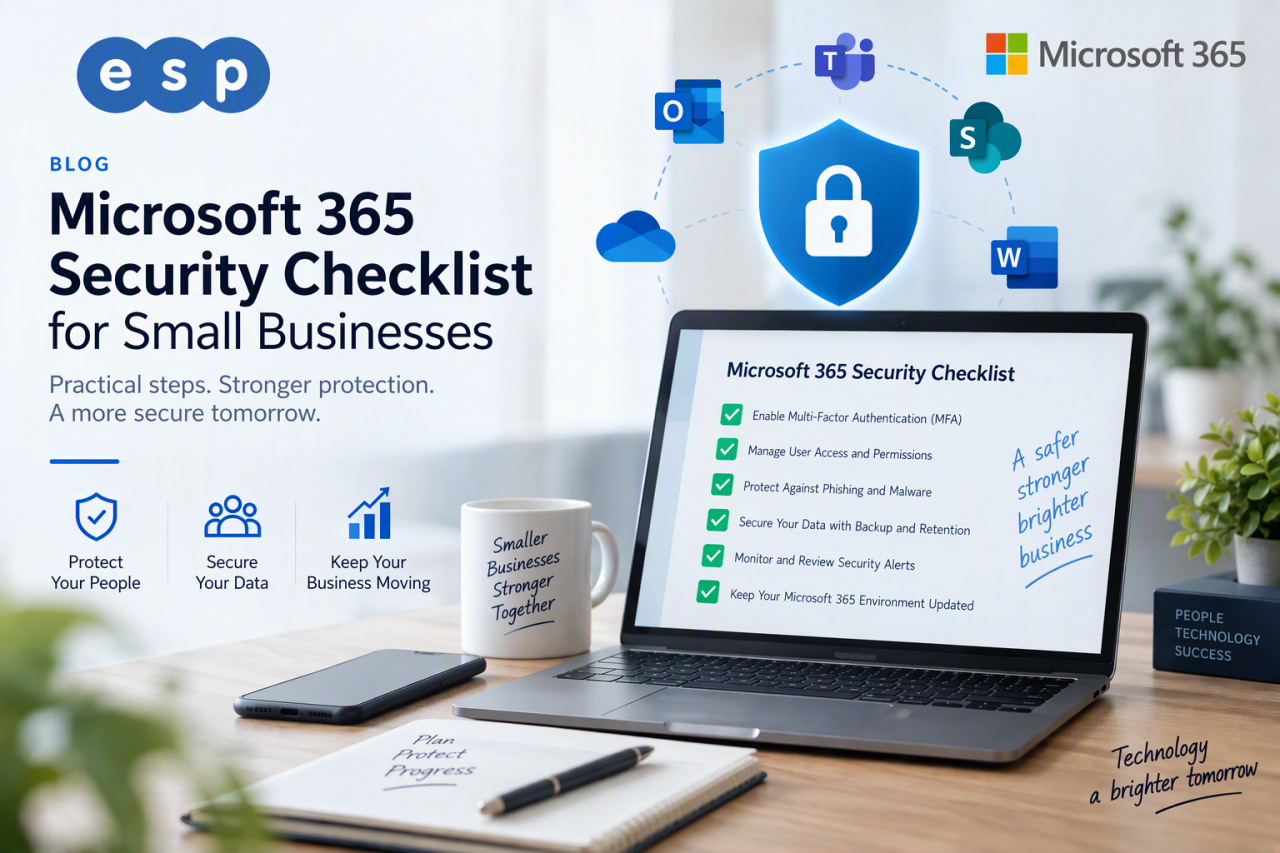
Security services often work alongside tools such as MFA and Microsoft 365 security controls. You can learn more in our guides on what MFA is and Office 365 security.
If your business also relies on hosted telephony and communications, you may also find our article on 3CX phone systems useful.
How a Managed Service Provider Works
Understanding the working model helps show what an MSP does in real terms. The real value is in how the service runs day to day.
Onboarding and environment assessment
Most providers begin with an audit of your current estate. They review devices, users, licences, backups, risks, vendors, and business operations dependencies.
This first stage identifies gaps, priorities, and quick wins.
SLA and contract setup
A good provider sets out service scope, hours, exclusions, escalation, and response commitments in writing. Service level agreements should include performance metrics, response times, and security expectations.
Routine remote management
Once live, the provider remotely manages alerts, patching, updates, access, antivirus, backups, and support tasks. Remote access tools let engineers fix many problems quickly without waiting for an on-site visit.
Escalation and incident response
When major faults occur, the MSP follows defined escalation paths. These processes are designed to reduce downtime, protect business data, and restore core services quickly.
In-House vs MSP: Augmenting Your IT Team
For many buyers, the key question is not only what an MSP is, but whether it is better than hiring in-house.
Cost comparison
Running an in-house function means salaries, pensions, training, tooling, holiday cover, and recruitment. An MSP usually offers a subscription model or other recurring price, often with a fixed monthly charge and more predictable billing.
Our detailed comparison of outsourced IT support vs in-house IT breaks down the true costs involved.
Co-managed models
A co-managed approach blends an existing IT team with an external managed support provider. Your internal staff keep strategic ownership or on-site knowledge, while the MSP handles monitoring, patching, after-hours cover, or specialist security.
When to retain in-house capability
Keep some in-house ownership if your organisation depends on bespoke workflows, local site support, or internal stakeholder management that an external partner cannot fully replace.
When to outsource fully
Full outsourcing often suits smaller companies with no mature IT team, or firms that want expert support without building a large in-house function.
If you are considering a provider change, our article on switching IT providers explains the process in detail.
Choosing a Managed Service Provider
Choosing well matters as much as deciding to outsource at all.
Check security certifications and audits
Ask about frameworks, accreditations, and independent security audits. A provider helping you face cyber threats should prove how it secures its own environment too.
Review SLAs, response times, and penalties
SLAs should be specific. Look for clear support windows, response targets, escalation rules, and any credits or penalties for failure.
Check experience and references
Industry fit matters. Ask whether the provider has worked with organisations like yours and request references or case studies.
Ask about cloud and infrastructure capability
If you are planning cloud migration, confirm who designs the move, who executes it, and who supports the environment afterwards.
Verify pricing transparency
A reliable service provider explains billing clearly. That includes what is covered, what counts as project work, and how growth or extra devices affect price.
If your IT plans depend on better connectivity, you may also need to review your business broadband services to make sure your infrastructure can support cloud systems, remote users, and managed support tools.
Managed Service Provider Pricing Models
Most MSPs use either a subscription model, per-user pricing, or per-device pricing. Some also blend these models based on service scope.
Higher SLA commitments usually cost more. Faster response, 24/7 support, and stronger security often increase the monthly rate. Even so, many firms prefer that trade-off because it supports cost control and fewer surprises.
If your roadmap includes cloud migration, budget for one-off project costs as well as ongoing support. A provider may save money over time, but migration still needs planning and investment.
Security, Compliance, and Data Protection
Security is one reason many organisations consider managed services in the first place. They need stronger protection than they can build alone.
A modern MSP helps protect businesses through monitoring, layered controls, encryption, and policy enforcement. Many also support GDPR and sector-specific requirements with reporting and audit preparation.
This matters because outsourcing to an MSP can improve compliance and guard against emerging cyber threats. Providers may deploy endpoint controls, filtering, intrusion prevention, and identity protections to deliver enhanced security and stronger data protection.
Business Continuity, Backup, and Disaster Recovery
Good MSPs do more than back up data. They help ensure business continuity by planning for outages before they happen.
That includes backup scheduling, verification, restore testing, and documented incident processes. It also includes defining RTO and RPO targets based on how critical different services are to the organisation.
Migrating to Cloud with an MSP
A strong MSP can make cloud migration smoother by assessing applications, dependencies, security, and user impact before work begins. They help choose between lift-and-shift and redesign, then move systems with minimal disruption.
During migration, the provider may handle backups, identity setup, testing, rollback planning, and post-migration support. This is where cloud infrastructure and operational experience matter most.
What is the difference between an ISP and an MSP? An ISP gives you internet connectivity. A managed service provider manages and supports your wider IT estate, including users, devices, servers, security, and cloud platforms.
Common Challenges and How to Mitigate Them
The biggest problems in managed services are often not technical. They are communication gaps, unclear scope, and poor governance.
To avoid that, agree responsibilities early, review SLAs regularly, and use phased onboarding to reduce disruption. This helps set realistic expectations and keeps the relationship aligned with business objectives.
A common mistake is choosing a provider on price alone. Low-cost delivery can create weak coverage, poor reporting, and missed risk.
Getting Started: First Steps with a Managed Service
Start with a baseline audit. Let the provider assess your IT systems, risks, licences, and support gaps before you sign a long agreement.
Next, define KPIs, SLAs, reporting format, and communication cadence. If possible, begin with a pilot or phased onboarding for lower-risk sites or teams.
This approach keeps change controlled and gives both sides time to adjust.
MSP Selection Checklist
- Confirm 24/7 support availability
- Review service level agreements
- Check infrastructure management tools used
- Ask about remote monitoring and network monitoring
- Verify backup, restore, and disaster recovery processes
- Assess data protection and security practices
- Request client references and case studies
- Confirm clear contract terms and transparent pricing
- Review cloud and cloud migration experience
- Check whether the provider supports co-managed as well as fully outsourced models
Final Thoughts and Next Steps
So, what is a managed service provider? It is a partner that takes responsibility for key IT services through proactive monitoring, support, security, and management, usually for a recurring monthly fee.
For many organisations, the right managed service provider improves resilience, reduces risk, and gives access to skills that would be costly to build in-house.
If you are reviewing your current support model, start with an audit of your systems, risks, and service gaps. Then compare providers based on security, service quality, pricing clarity, and operational fit.
Contact ESP Projects
If your current IT support feels reactive, inconsistent, or stretched too thin, a managed services approach can help improve reliability, strengthen security, and reduce long-term operational risk.
ESP Projects works with businesses across the UK to deliver proactive IT support, cloud management, cyber security, backup solutions, and infrastructure support tailored to real business requirements.
Whether you need fully outsourced IT support or additional expertise alongside your internal team, ESP Projects can help you build a more resilient and scalable technology environment.
You can also request pricing or contact ESP Projects to discuss your current setup and future requirements.